



| SECTION |
|
CONTRASTING VIEWS LIFE DURING WARTIME PROPENSITY FOR VIOLENCE RIOTERS AND THRILL-SEEKERS THE VAPOR JETS RETHINKING ADAMS TRAVELS WITH SHIVAS AND ANGELS SEEING THE LIGHT A 9-1-1 WAKE-UP CALL |
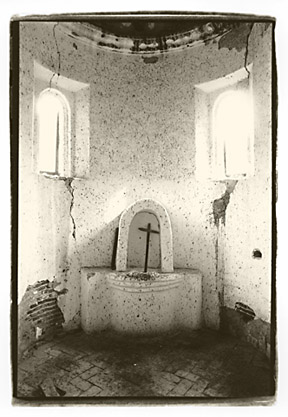
IN THE PHOTO ABOVE From photography exhibits to readings from travel journals accompanied by slide presentations, Lacy promotes cultural knowledge and understanding through the recorded visions of his personal experience.
ADDITIONAL CONTENTS At the conclusion of the article is an interview with Mark Lacy on photography and culture, as well as further exploration of his photographic subjects.
if images appear dark.
AS WITNESS TO MANY CULTURAL PHENOMENONS, MARK DANIEL LACY VISUALIZES A COMPLEX WORLD
Whether he discusses his writing, his ambition to establish a cultural institution in Houston, or his educational presentations, all stem from one common factor -- photography. Lacy studies photography, makes photography, uses photography, teaches photography, and like all of us, sees more photography than almost anything else we can think of in our daily lives.
Lacy is quick to point out valuable aspects, as well as the obtrusiveness of images in our world. "I think it is critical for ordinary people, who have no certain access to mainstream media, to use more words and images to tell their stories through art, social events and educational activities," Lacy said. He combines music from his radio shows with the images and written ideas from his travels to present interesting cultural themes and lessons offered by people he meets along the way.
Lacy says he sometimes takes his communication skills for granted, since he studied aspects of media, researching, analyzing and reporting, as a journalism and fine arts student. "But, when I volunteered one year to help teach photography to school children with Literacy Through Photography, one of the kids showed pictures of safe and beautiful things at her home and told a tale of such uneasiness in her life through her essay, (that) I developed the greatest respect for the power of art as communication. I had the idea to start a cultural institute before that experience, but I became very committed to it right away."
The following article and interview follows Lacy's photography experience to his current efforts to develop an artistic communications resource in Houston and promote greater cultural literacy in the diverse world we live in.

