
GRAPH: SHUTTER SPEED AND APERTURE
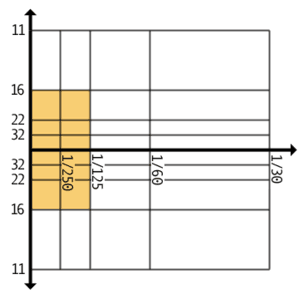
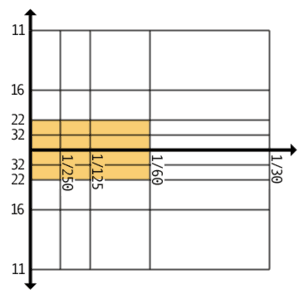
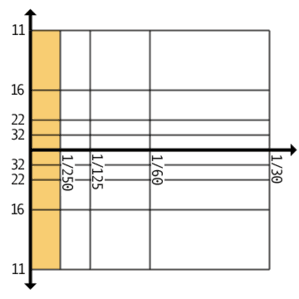
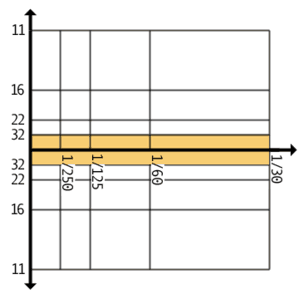
In the graphs below, the vertical line represents the Aperture, from f32 to f8, and the Shutter Speed, from 1/250 to 1/30, is represented on the horizontal line.
|
|
|
Here is a representation of an exposure combining an Aperture of f16 with a Shutter Speed of 1/125. Just like the Shutter Speed, the Aperture Settings, or F-stops, increase the exposure by a multiple of two or decrease the exposure by 1/2. |
Because f22 is 1/2 the Aperture size of f16, the Aperture represented in the graph on the left, the time of the Shutter Speed must be multiplied by 2, from 1/125 to 1/60, to make an exposure equal to the exposure in the graph on the left. |
|
|
|
This graph represents an exposure equal to those represented above. While the volume of light is the same, the Aperture of f11 is wider and the Shutter Speed of 1/250 is faster, having a shorter duration. The faster Shutter Speed may be required to photograph a moving subject, or to use a longer lens, which can magnify Camera or Subject movement. |
This graph also represents an exposure equal to those represented above. The smaller Aperture of f32 will provide greater Depth of Field and the long Shutter Speed of 1/30 will compensate for the reduced amount of light passing through the small Aperture. This consideration will help blur the motion of water or other moving objects. |
These graphs all represent a consistent exposure where adjustments to the Aperture have been compensated for using the Shutter Speed. In full Daylight, where the sun is unobstructed and shining directly on the subject, these exposures could all be considered a Basic Daylight Exposure if the Film Speed is 100. Once a meter reading is established, adjustments can be made to shorten the Shutter Speed or increase the Depth of Field.
The above graphs represent a continuous light source. Combining a Strobe with Continuous Light may be thought of differently. See
HIFC FIELD GUIDE | Return to Exposure | info@houstonculture.org
Updated Oct. 2001